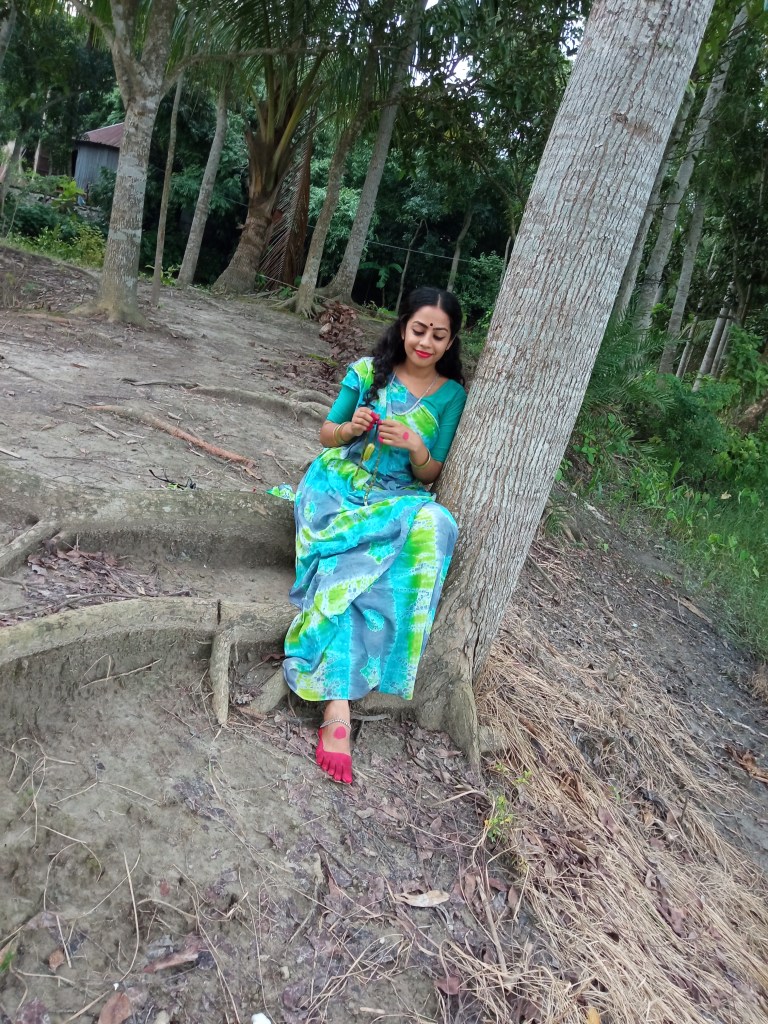
Happy Krishna Janmastami!

Before the Teaching Begins: Returning to the First Chapter of the Gita

For years, I neglected the first chapter of the Bhagavad Gita.

I thought there was not much there beyond poetry, atmosphere, and the setting of the stage. The real Gita, I believed, began in the second chapter, when Arjuna finally turned to Krishna and surrendered himself as a disciple:

I am your disciple. I take refuge in you. Tell me what I ought to do.

Perhaps this was only natural for me. I have always had a strange tendency to begin from the second rather than the first.

But lately I have wondered: before asking what one ought to do, should one not first understand where one is standing?

And so I returned to the first chapter.

Not to Krishna’s answers yet, but to Arjuna’s bewilderment.

The Battlefield Before the Battle🌸

I should say at the beginning that I am trying to look at the Gita from Arjuna’s side.

Perhaps because I recognise something of my own ethical conflicts in his.

And Krishna—I love him in one particular way here, though outside the Gita I love him in many others.

I think of Arjuna as someone who has had to break himself, again and again, in order to arrive at the place from which he must lead. His journey has not always been morally uncomplicated. At times, he has had to accept paths that, seen in isolation, might appear questionable.

But Krishna does not look at him through the narrow lens of isolated acts.

Govinda, who sees the whole, opens the whole before him.

And perhaps it is only when the larger picture is revealed that Arjuna can finally afford to be truthful about the conflict within himself. It was this negotiation—between loyalty and conscience, action and doubt, the self and the collective—that led me back into the first chapter I had once abandoned.

The Gita begins at Dharmakshetra, Kurukshetra.

A field of dharma.

A field of war.

But I have begun to imagine this Dharmakshetra as something more intimate: the temple within the heart, the inner ground where reason and conscience meet.

And sometimes collide.

There stands Arjuna, a warrior who has come prepared for battle. Yet just before the battle begins, certainty abandons him.

The warrior becomes hesitant.

The man who came to fight begins to question whether he should fight at all.

And that hesitation, strangely enough, becomes the doorway to truth.

Which Side Are We On?🪷

Which side we stand on matters.

Or does it?

Some sides are chosen for us long before we become capable of choosing anything ourselves. We are born into families, communities, histories, relationships, loyalties. They arrive with birth, almost like names.

How long, then, are we obliged to stand with them?

And when we cross over to another side, how much of that crossing is really our own decision?

Can human beings truly be separated by clean lines—this side and that, ours and theirs, righteous and unrighteous?

How much of life do we control at all?

And even when we say, I belong to no side, have we not already taken a position?

How far can a person walk entirely alone?

There is another difficulty.

The people on our side are never entirely good.

What do we do with them?

For anyone entrusted with leadership, there is an even more dangerous question: where does caring for a community end and interfering with an individual’s freedom begin?

The line is painfully thin.

And what are we to make of a community that can turn someone into its hero today and trample the same person tomorrow?

Is there a way to belong without surrendering oneself?

A way to act without becoming false to one’s own conscience?

Perhaps there is.

But it is a subtle road.

To walk it, one must become a yogi.

And perhaps not everyone can.

That may be why the person walking such a path sometimes appears strange to everyone else. Around us, people seem to move together, one following another. Yet there may be no single road to the destination.

Sometimes, on this battlefield, we may even find ourselves outnumbered—like the Pandavas.

Those without scruple may appear to be moving ahead.

But appearance is not always strength.

Numbers are not always strength.

Victory is not always strength.

There is another kind of strength: the strength of an intention directed toward kalyan—toward what is ultimately good.

When the Enemy Has a Familiar Face🌺

Perhaps an unknown enemy is easier to destroy.

There is no shared afternoon with an unknown enemy. No remembered kindness. No old affection waiting quietly in the mind.

But what happens when the person standing across the battlefield is someone who once loved us?

Someone we have loved?

Someone whose presence belongs to our own history?

Before we can become hard enough to stand against such a person, does the memory of their love not first break something inside us?

This, to me, is the terrible beauty of Arjuna’s collapse in the first chapter.

He does not look across the battlefield and see simply enemies.

He sees faces.

And once the enemy has a face, morality becomes much more difficult.

Arjuna knows many things. Yet all that acquired knowledge cannot give him a clear view of life as a whole. Instead, fragments of knowledge gather like broken clouds across his vision. He knows enough to argue with himself, but not yet enough to escape the argument.

Knowledge has brought him not certainty, but paralysis.

Perhaps there comes a point when knowledge alone cannot carry us any further.

And this is where surrender begins.

Not the surrender of thought.

Not obedience without question.

But the surrender of the illusion that our fragmented knowledge is large enough to contain the whole.

Arjuna Still Questions🌿

There is something about Arjuna’s surrender that I find especially beautiful.

He questions Krishna.

He questions his Guru. And when an answer does not satisfy him, he questions again.

So surrender does not silence him.

It makes a deeper conversation possible.

To surrender, then, is not necessarily to stop thinking. Nor is faith the refusal to ask difficult questions. Arjuna’s relationship with Krishna seems to suggest almost the opposite: ask properly. Listen carefully. Question again if you must.

The Guru’s words are not meant to become another rigid wall around the mind.

And then Krishna tells him:

You speak like a,pandita, learned man, Arjuna, yet you grieve for those for whom the wise do not grieve.

I keep returning to the vocabulary surrounding this moment.

Pandit. Gyani. Murkha.

Buddhiman. Prayavan. Mohavishta.

Learned. Knowing. Foolish.

Intelligent. Wise. Deluded.

In the Gita, these do not feel like simple opposites to me. They seem almost like stations of consciousness through which a person travels.

Perhaps one can be learned and still bewildered.

Intelligent and still deluded.

Knowledgeable and still unable to see.

The journey of the yogi, then, is not merely from ignorance to information. It is a movement through different ways of knowing until knowledge itself is transformed.

How Many Times Do We Die?🌱

Krishna tells Arjuna that even if he believes the self to be born with the body and to die with it, grief cannot be the final truth:

What is born must die; what dies is born again.

But whenever I encounter this idea, another question comes to me.

Are birth and death only events of the body?

Must rebirth wait until after physical death?

I don’t think it does.

I think a human being can be born many times within a single life.

And die many times too.

There are selves we once thought permanent that one day simply cease to exist.

A belief dies.

A certainty dies.

A relationship dies.

A version of the future dies.

Sometimes an entire way of understanding ourselves disappears, and for a while we do not know who has survived it.

Yet something does.

And slowly, from the ruins of one self, another begins to take shape.

Perhaps this too is a kind of rebirth.

Perhaps our lives contain many small deaths before the death of the body, and many births before whatever birth may—or may not—come afterward. A person may be born and die repeatedly within one lifetime, and that mokshayoga lies somewhere in the journey toward one’s deepest self.

And perhaps this is why I no longer think of the first chapter as merely an introduction.

The Gita could not have begun with Krishna’s answers.

It had to begin with Arjuna’s collapse.

Before there can be wisdom, there must be bewilderment.

Before there can be instruction, there must be a question.

Before surrender, there must be that terrible moment when everything we know proves insufficient.

And before Krishna can show Arjuna the path, Arjuna must first stand still in the middle of the battlefield and admit:

I do not know which way to go.

Perhaps every ‘Gita‘ begins there.

Not in Kurukshetra alone,

but in that quiet and frightening Dharmakshetra within us.

A Room of Her Own

I’ve often felt that no single social media space quite captures the full range of who I am and what I care about. Different platforms naturally bring together different audiences, and with each comes a different context, set of expectations, and sense of accountability. Over time, this has meant that different parts of myself have remained scattered across different spaces.

This website is an attempt to bring those diverse parts of myself together—to create a space where I can express them more freely, coherently, and as parts of a larger whole.

Here, you’ll find my fiction, research work, academic discussions, personal reflections and opinions, alongside the various hobbies and passions I pursue. At first glance, some of these interests may seem unrelated. But underneath, they are interconnected, each reflecting a different dimension of the same self.

This website is a place for those dimensions to coexist, connect, and perhaps make a little more sense together.

So……welcome!

Trauma Chain

What’s something you do completely differently from how you were raised?

I try not to pass on the trauma I inherited. I’m choosing to break the cycle.

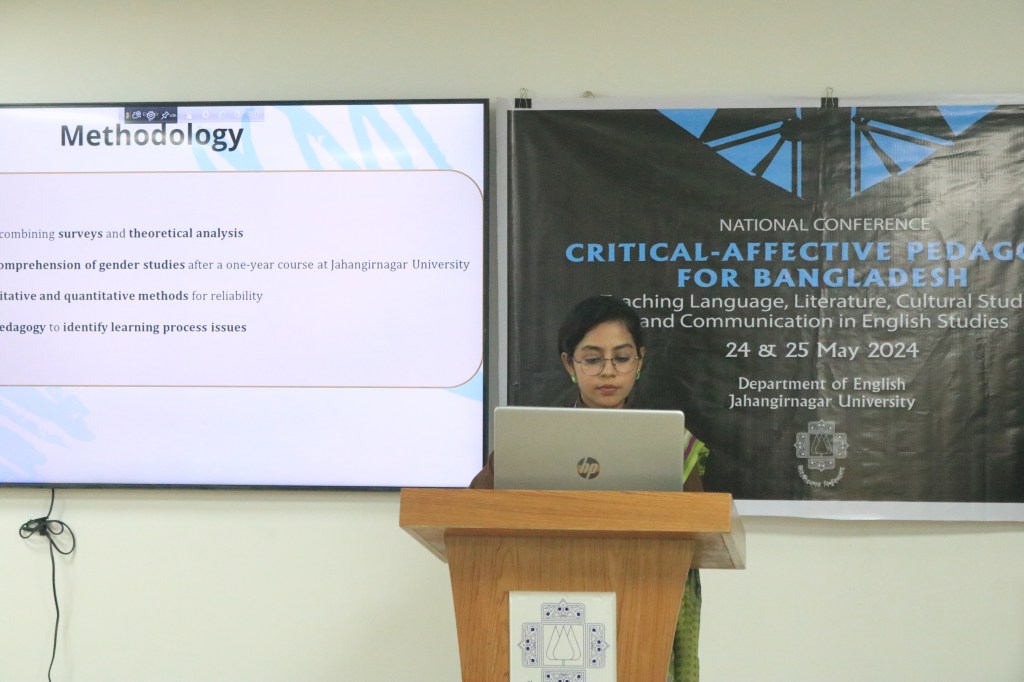
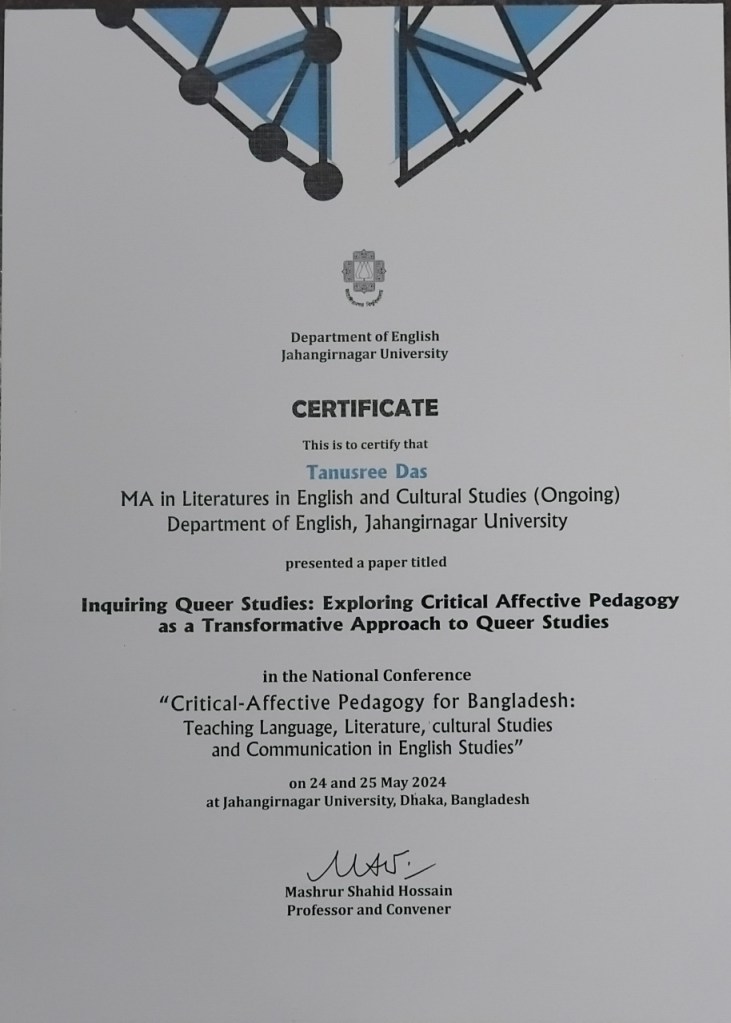
Inquiring Queer Studies: Critical Affective Pedagogy as a Transformative Framework for Gender and Sexuality Education in Bangladeshi Tertiary Institutions

Co-author: Ahmed Abdullah bin Farooqi Rayhan
Presented: 25 May 2024
Event: Critical Affective Pedagogy for Bangladesh
Organized by: Department of English, Jahangirnagar University

On 25 May 2024, our research titled “Inquiring Queer Studies: Critical Affective Pedagogy as a Transformative Framework for Gender and Sexuality Education in Bangladeshi Tertiary Institutions” was presented at Critical Affective Pedagogy for Bangladesh, organized by the Department of English, Jahangirnagar University.

The study explores an important challenge within gender and queer studies education in Bangladesh: how can educators move beyond conventional, predominantly rote-learning approaches to foster genuine understanding, critical engagement, and empathy when teaching gender and sexuality?

Gender and queer studies courses in Bangladeshi tertiary institutions operate within a complex socio-cultural environment. Conservative attitudes surrounding gender and sexuality, established traditions of memorization-based learning, and the emotional distance many students experience from these subjects can make meaningful classroom engagement particularly difficult.

Drawing on critical pedagogy (Freire, 1970; Giroux, 1988; hooks, 1994), affect theory (Ahmed, 2004; Massumi, 2002), and critical affective pedagogy (Boler, 1999; Keddie, 2010), our research examines how education can engage not only students’ intellectual understanding but also their emotional responses to questions of gender, sexuality, difference, and identity.

Using a mixed-methods approach, the study combines survey data from students at Jahangirnagar University who had completed at least one year of gender studies instruction with a theoretical analysis of critical affective pedagogical practices. The findings indicate notable gaps in comprehension and emotional engagement among students exposed exclusively to conventional pedagogical methods.

In response, the study proposes five contextually adapted critical affective pedagogical strategies for Bangladeshi tertiary education:

  1. Cultural Sensitivity — situating discussions of gender and sexuality within students’ cultural and socio-economic realities while maintaining space for critical inquiry.
  2. Reparative Reading — encouraging students to approach texts and identities beyond suspicion or predetermined judgment and remain open to alternative meanings and experiences.
  3. Reflection and Reflexivity — enabling students to examine how their own assumptions, social positions, experiences, and emotions shape their understanding of gender and sexuality.
  4. A Reading Resilience Toolkit — developing students’ capacity to engage thoughtfully with unfamiliar, challenging, or emotionally demanding materials.
  5. Intentional Embrace of Emotional Responses — recognizing discomfort, resistance, empathy, uncertainty, and other emotional responses as meaningful components of the learning process rather than obstacles that must simply be suppressed.

The research argues that critical affective pedagogy can offer a transformative framework for gender and sexuality education in Bangladesh. Rather than treating students as passive recipients of theoretical knowledge, this approach creates opportunities for them to interrogate assumptions, reflect on emotional responses, and develop more nuanced understandings of gender-diverse and queer identities.

By bringing queer studies, affect theory, and critical pedagogy into conversation with the particular realities of Bangladeshi higher education, the study also seeks to contribute to the still underrepresented body of pedagogical scholarship emerging from South Asian contexts.

The presentation at Jahangirnagar University provided an important opportunity to consider how emotionally engaged, culturally responsive, and critically reflective pedagogies might help create more inclusive and meaningful spaces for teaching gender and sexuality in Bangladesh.

Where Learning Felt Like Love

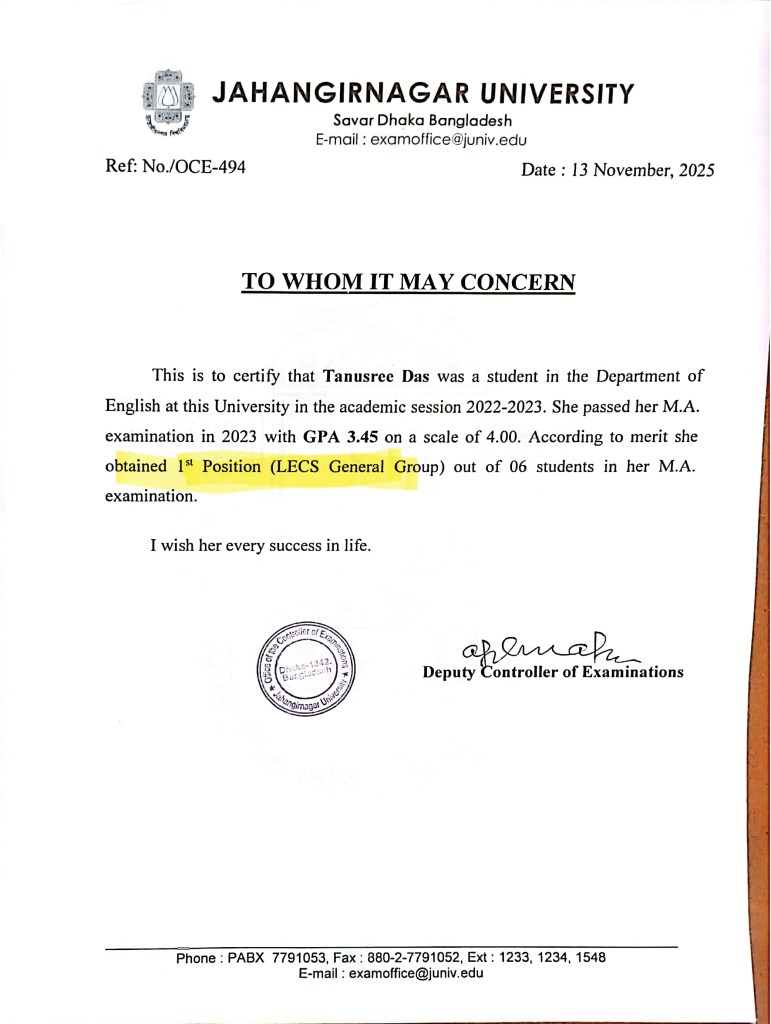
Of all the classes, courses, and academic experiences throughout my educational journey, the one closest to my heart has been the Master’s in Literature and Cultural Studies at the Department of English, Jahangirnagar University.

When I first looked through the Master’s syllabus in my fourth year, I knew immediately: I belong here. This was where I was meant to be, despite all the other potentially “better” paths I could have taken.

I would sit in class almost like a meditator—listening intently to my teachers, asking questions, taking notes, and sharpening my thoughts through discussions with my wonderful classmates. For me, it felt like a pursuit born purely out of love. I genuinely enjoyed studying, and in that sense, earning first place came almost effortlessly. This one year of my Master’s has opened so many doors to knowledge and new ways of seeing the world.

I am deeply grateful to my teachers, my classmates, and my family. And above all, I want to thank myself—for not giving up.

A proud moment to cherish

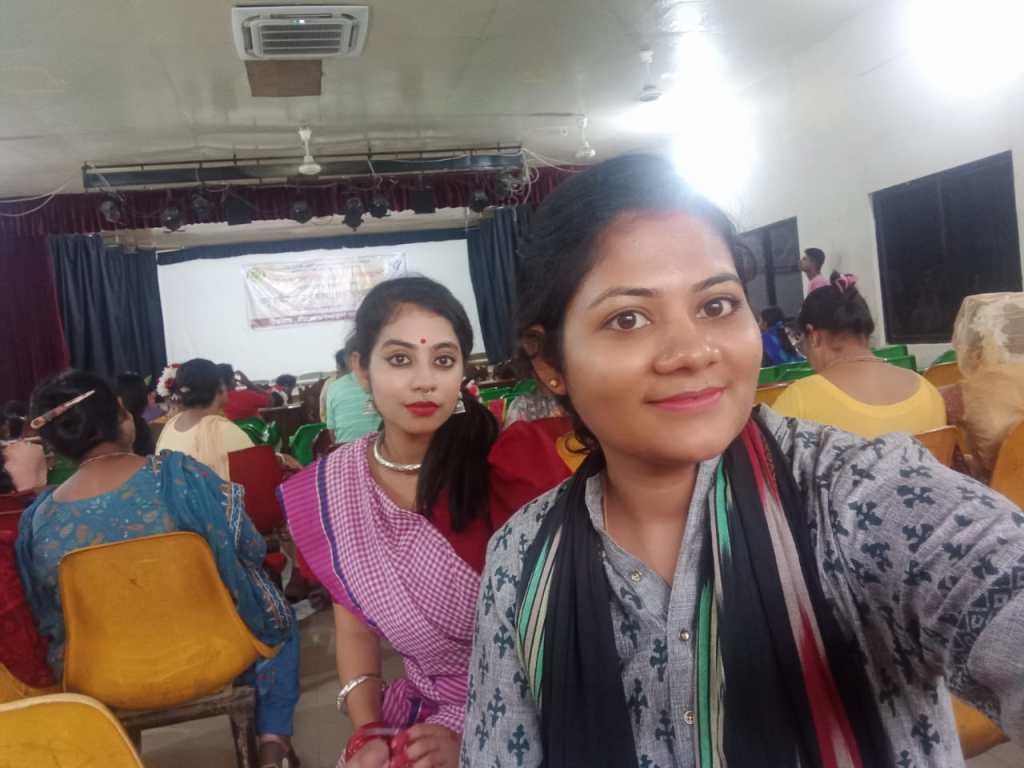
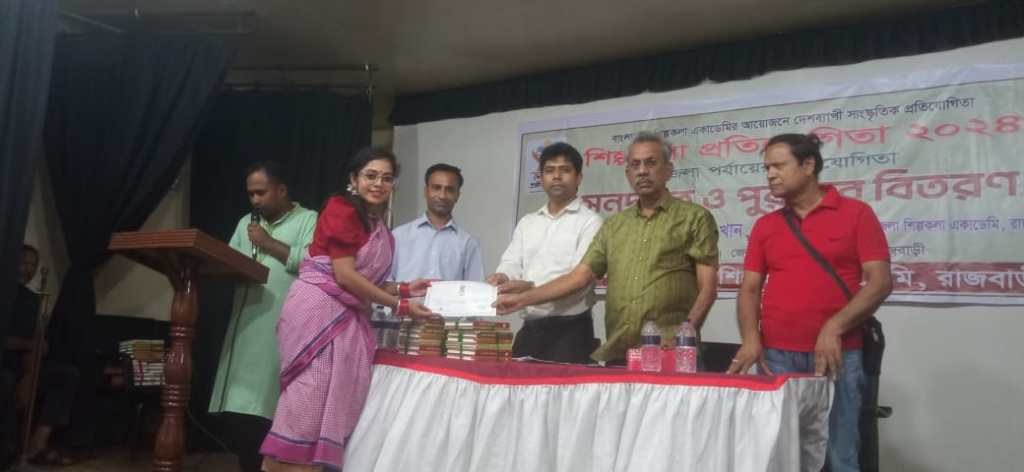
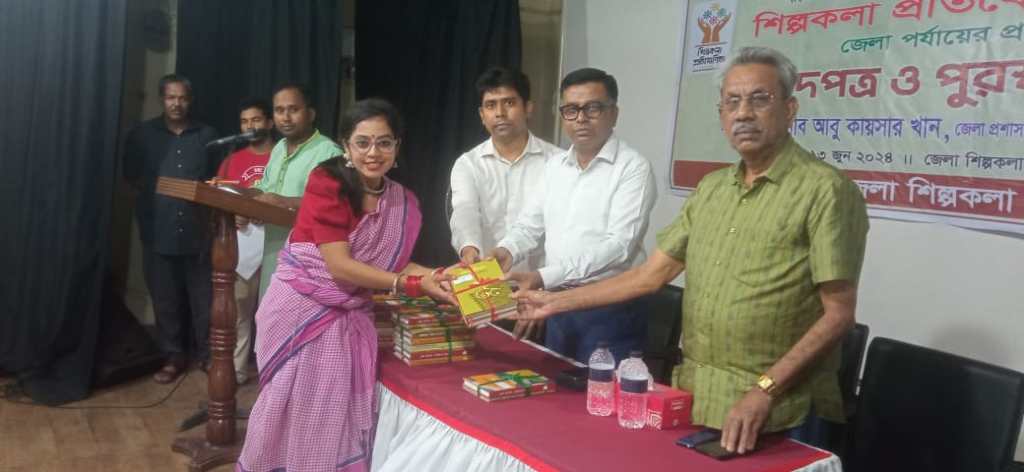
A memorable moment from Shilpakala Protijogita 2024, organized by the Bangladesh Shilpakala Academy, where I was honored to secure 1st Position in Folk Dance at the Rajbari District Level.

Beyond the achievement itself, this photograph holds a deeper meaning for me. Beside me is my elder sister—my unwavering support system, constant source of encouragement, and someone who has always believed in me throughout my journey.

This recognition remains a cherished milestone—celebrating not only an achievement in folk dance, but also my connection to our cultural heritage and the invaluable support that has accompanied me along the way.

Research & Working Papers

1. Differential Assimilability: Racialized Technologies of Exclusion in Anzia Yezierska’s ‘America and I’ and Chimamanda Ngozi Adichie’s ‘The Thing Around Your Neck’  [in revision]

Abstract

This paper compares Anzia Yezierska’s “America and I” (1923) and Chimamanda Ngozi Adichie’s “The Thing Around Your Neck” (2009) to examine how the American Dream’s promise of meritocratic belonging is racialized and gendered across a century of immigrant women’s writing. While existing scholarship reads each author separately through feminist or postcolonial frameworks, this paper argues that juxtaposing a Jewish immigrant narrative with a Black African one reveals two distinct technologies of exclusion operating under a shared ideology. Yezierska’s protagonist is denied belonging through class and cultural illegibility despite her latent proximity to whiteness, while Adichie’s Akunna is rendered permanently hypervisible through racial fetishization, foreclosing assimilation regardless of labor or effort. Reading these texts together demonstrates that the American Dream does not simply exclude immigrant women uniformly, but calibrates exclusion differently depending on the immigrant body’s relationship to whiteness — a distinction with implications for how comparative immigrant literature theorizes gendered assimilability. Drawing on Bhabha’s hybridity, Crenshaw’s intersectionality, and critical whiteness studies, this paper offers a close reading of embodiment, labor, and sexual objectification in both texts to argue that “otherness” is not a single, transhistorical condition but a differentiated apparatus shaped by the racial logic specific to each historical moment. This comparative approach contributes to immigrant literature studies by proposing a framework — differential assimilability — for analyzing how race, gender, and historical context jointly determine the terms of exclusion in American immigrant narratives.

THE MINORITY SURVIVAL PATRIARCHY PROJECT (THREE-PART RESEARCH SERIES)

A connected series developing Minority Survival Patriarchy (MSP) as an original postcolonial feminist framework: Paper I establishes the empirical foundation, Paper II examines everyday negotiated agency, and Paper III extends MSP into a transferable theory of minority citizenship.

I. Before the Border: Minority Survival Patriarchy and the Pre-Migration Constraints on Bengali Hindu Women in Bangladesh  [accepted for conference presentation :4th World Conference on Gender and Women’s Studies, UK]

Abstract

By theorizing the pre-migration terrain, the paper extends migration scholarship beyond border crossing to show how international mobility is socially produced through the everyday insecurities of religious minority women. Drawing on secondary literature and integrating feminist human security, intersectionality, and postcolonial feminist theory, this conceptual paper examines the pre-migration experiences of Bengali Hindu women in Bangladesh. It argues that international migration is constituted before departure, where access to education, resources, mobility, and decision-making power determines who is able to migrate. Women’s capabilities and agency are shaped by intersecting structures of patriarchal power, religious minority insecurity, and material inequality, illustrated by unequal inheritance regimes and histories of dispossession. The paper introduces Minority Survival Patriarchy (MSP) to explain how politically vulnerable minority communities intensify control over women’s education, mobility, marriage, and reproduction as a strategy of collective survival, thereby constraining their migration opportunities. This framework departs from existing accounts of patriarchal nationalism as an assertion of sovereign power, theorizing minority patriarchal control instead as a defensive response to existential vulnerability. In doing so, the paper reframes migration as a process constituted long before border crossing and foregrounds pre-migration insecurity as a critical site for understanding gendered mobility among religious minorities.

II. Negotiating Voice under Minority Survival Patriarchy: Everyday Lives of Bengali Hindu Women in Bangladesh  [in progress]

Abstract

Building upon the conceptual framework developed in the preceding article, this study investigates how Bengali Hindu minority women experience, negotiate, and contest the everyday operation of Minority Survival Patriarchy (MSP) in contemporary Bangladesh. While existing scholarship has documented gender inequality and minority vulnerability separately, limited research has examined how these intersect in women’s everyday lives. This article therefore explores how family expectations, marriage practices, inheritance norms, education, employment, mobility, and community surveillance collectively shape women’s opportunities for agency and voice. Using qualitative research methods, including in-depth interviews and thematic analysis, the study examines how women understand and respond to competing expectations originating from state institutions, wider society, and their own minority communities. Rather than portraying women as passive victims, the article analyses the diverse strategies through which they negotiate conformity, resistance, compromise, and everyday agency under conditions of structural constraint. The findings are expected to refine the concept of Minority Survival Patriarchy by identifying both its explanatory strengths and its empirical limits, contributing to feminist ethnography, minority citizenship studies, and South Asian gender scholarship.

III. From Constrained Voice to Transformative Agency: Reimagining Minority Citizenship for Bengali Hindu Women in Bangladesh  [in progress]

Abstract

Having established the conceptual foundations of Minority Survival Patriarchy and examined its operation in everyday life, this article explores pathways through which structurally constrained voice may be transformed into meaningful agency among Bengali Hindu minority women in Bangladesh. Moving beyond diagnosis, the study asks what institutional, legal, educational, and community-level changes are necessary to expand women’s substantive citizenship while recognising the particular vulnerabilities associated with minority status. Integrating feminist legal theory, citizenship studies, human rights scholarship, and South Asian gender research, the article critically evaluates the relationship between personal law, inheritance reform, constitutional protections, civil society organisations, educational access, and women’s political participation. It argues that strengthening women’s agency does not require abandoning minority identity; rather, sustainable reform depends upon simultaneously addressing gender inequality and minority insecurity. The article proposes a multidimensional framework of transformative minority citizenship in which legal equality, material independence, epistemic recognition, and community participation operate as mutually reinforcing conditions for agency, concluding the trilogy by identifying realistic pathways for social transformation, with relevance to other politically vulnerable minority communities in South Asia.

CONFERENCE PAPERS

4. Silent Exodus: Media Narratives and Representation of Hindu Migrations and the Diaspora

Community from Bangladesh  [presented, South Asian Media and Cultural Studies Conference, Florida State University, January 2025]

Abstract

This paper aims to examine the underrepresentation of Hindu migration narratives in Bangladeshi mainstream media and explores how this omission shapes collective memory and cultural identity, both for Hindu migrants and the nation as a whole. Although Hindu migration from Bangladesh began well before the 1990s, this research focuses on the period from 1992 to 2024, a critical timeframe shaped by the 1992 Babri Mosque demolition in India, which had significant impact on the Hindu community in Bangladesh, triggering social tensions and migration pressures. Guided by Stuart Hall’s “Politics of Representation” and Althusser’s concept of Ideological State Apparatuses, the study suggests that media functions as an ideological tool that upholds a dominant narrative aligned with nationalist agendas, aligning with insights from Edward Said and Chomsky on how media filters which voices are amplified or marginalized. Methodologically, this research utilizes qualitative content analysis of news articles and editorials from mainstream Bangladeshi media outlets spanning 1992 to 2024, complemented by diaspora literature and interviews with Hindu diaspora communities that foreground narratives of migration, cultural resilience, and identity preservation. The study argues that the underrepresentation of Hindu migration stories is a structured omission that reinforces a narrow, monolithic national identity, and advocates for a more inclusive media landscape that acknowledges Bangladesh’s diverse cultural legacy.

2. Inquiring Queer Studies: Critical Affective Pedagogy as a Transformative Framework for Gender and

Sexuality Education in Bangladeshi Tertiary Institutions  [presented, Conference on Critical-Affective Pedagogy for Bangladesh, Department of English, Jahangirnagar University, May 2024]

Abstract

Gender and queer studies courses in Bangladeshi tertiary institutions face persistent pedagogical challenges rooted in sociocultural conservatism, rote-learning traditions, and the emotional inaccessibility of their subject matter for many students. This study critically examines the inadequacies of conventional pedagogical approaches in facilitating genuine comprehension of, and empathy toward, gender-diverse and queer identities. Drawing on critical pedagogy (Freire, Giroux, hooks), affect theory (Ahmed, Massumi), and critical affective pedagogy (Boler, Keddie), the paper employs a mixed-methods design combining survey data from students at Jahangirnagar University who had completed at least one year of gender studies instruction with a theoretical analysis of critical affective pedagogical strategies. Findings reveal significant comprehension deficits and emotional disengagement among students exposed exclusively to conventional pedagogical methods. The paper proposes five contextually adapted critical affective strategies — cultural sensitivity, reparative reading, reflection and reflexivity, a reading resilience toolkit, and the intentional embrace of emotional responses — as pedagogical interventions with potential to render gender studies more effective and inclusive within Bangladesh’s specific socioeconomic and cultural context, contributing to underrepresented pedagogical scholarship at the intersection of queer studies, affect theory, and education in South Asian contexts.

ADDITIONAL MANUSCRIPTS IN PREPARATION

5. The Somatic Border: Height, Nutrition, and the Colonial Aesthetic Norm in International Beauty Pageants — A Case for Bangladesh  [in preparation]

Abstract

International beauty pageants continue to market themselves as sites of global inclusion and, increasingly, of intellectual empowerment (“beauty with a purpose”). Yet the informal somatic criteria that structure judging — above all, height and slenderness — remain rooted in a Western, historically colonial ideal of the female body. This proposal argues that these criteria function as a mechanism of structural exclusion for women from postcolonial nations whose average stature is shaped by histories of poverty-driven undernutrition rather than by any essential ethnic trait. Using Bangladesh as a case, where decades of documented childhood stunting and maternal malnutrition have produced a national female population that is, on average, markedly shorter than the pageant-industry ideal, the study asks how this body norm operates, how it compounds pre-existing marginalization within the nation, and whether the industry’s recent rhetorical turn toward “brains” meaningfully alters the physical filter that precedes it. The project situates itself at the intersection of postcolonial feminist theory, critical beauty-pageant studies, and the sociology of the body, proposing a mixed qualitative design combining discourse analysis of pageant judging criteria and media coverage with interviews of Bangladeshi contestants and organizers.

6. The Intersection of Postmodern Consumerism and Contemporary Fashion Culture: A Cultural Analysis of Outfit Repetition in the Age of Social Media  [in preparation]

Abstract

This paper explores the intersection of postmodern consumerism and contemporary fashion culture, with a specific focus on the social media phenomenon of avoiding outfit repetition. Drawing from Fredric Jameson’s essay “Postmodernism and Consumer Society,” the paper argues that the behavior of constantly seeking new clothing in response to social media visibility reflects key elements of postmodern thought, including the loss of originality, the dominance of pastiche, and the commodification of culture. Fashion, as consumed and displayed on social media platforms, becomes a space where individuality is replaced by imitation, and identity is shaped through adherence to fast-moving trends. The paper examines how this results in a “depthless” consumer experience, where the pressures of conformity and appearance lead to perpetual consumption, reflecting broader cultural shifts in postmodern society, and contributes to understanding how postmodernism manifests in everyday consumer behaviors.

7. Green Consumption Paradox: How Domestic Plant Aesthetics Obscure Systemic Deforestation in Global Capitalism  [in preparation]

Abstract

This paper examines the paradox of domestic plant cultivation within contemporary consumer capitalism, arguing that the visual and aesthetic pleasure derived from houseplant ownership operates as a form of environmental distraction that prevents critical engagement with structural deforestation. Through an analysis of environmental psychology, green capitalism discourse, and consumer culture studies, the paper demonstrates how the personal gratification associated with indoor plant aesthetics creates what it terms “commodified ecological consciousness,” a framework that obscures the extractive supply chains and land exploitation structuring both horticultural commerce and global deforestation. The houseplant trend — particularly as mediated through digital platforms and marketed as an environmental practice — is read as a neoliberal solution to ecological crises that individualizes environmental responsibility while naturalizing the capitalist logic driving large-scale forest destruction. The analysis integrates political ecology, environmental justice, and critical consumer studies to expose the systemic mechanisms through which aesthetic pleasure becomes complicit in ecological devastation.

Last updated -September 2026

A Village Girl

Rooted in Water Lilies

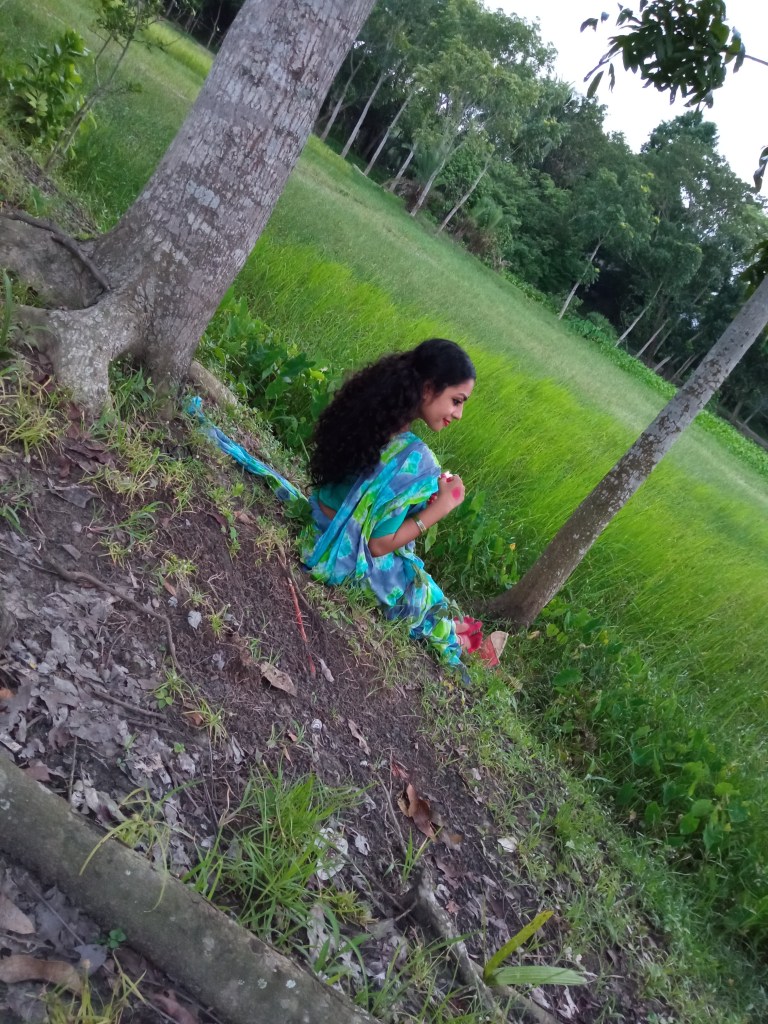
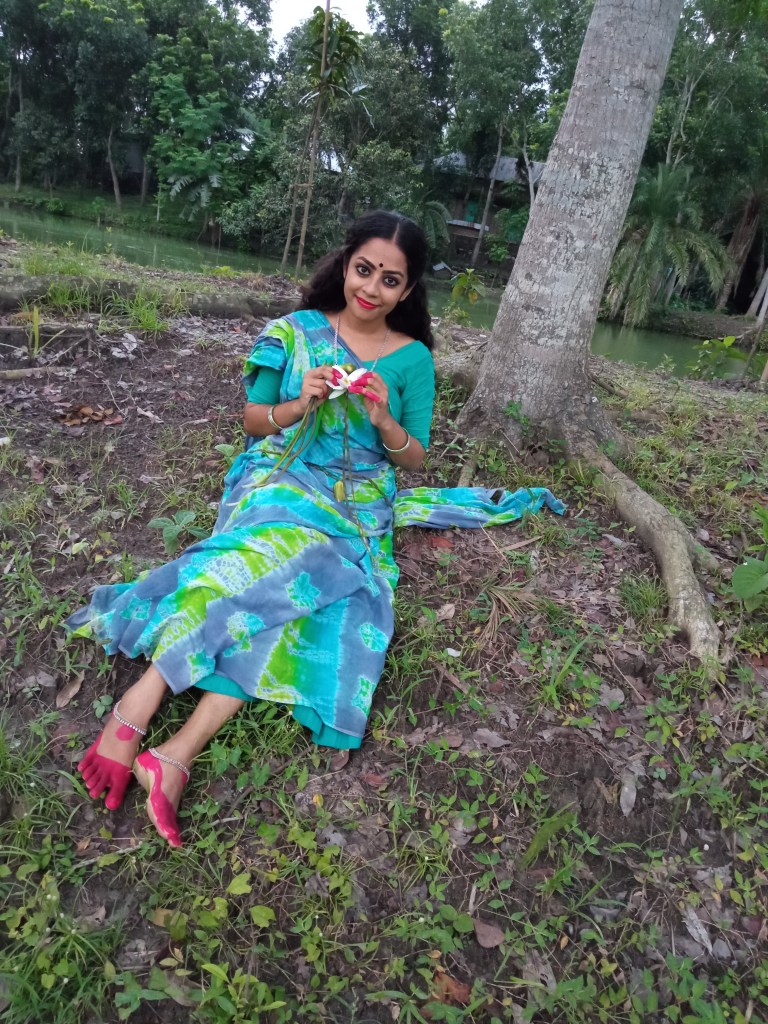
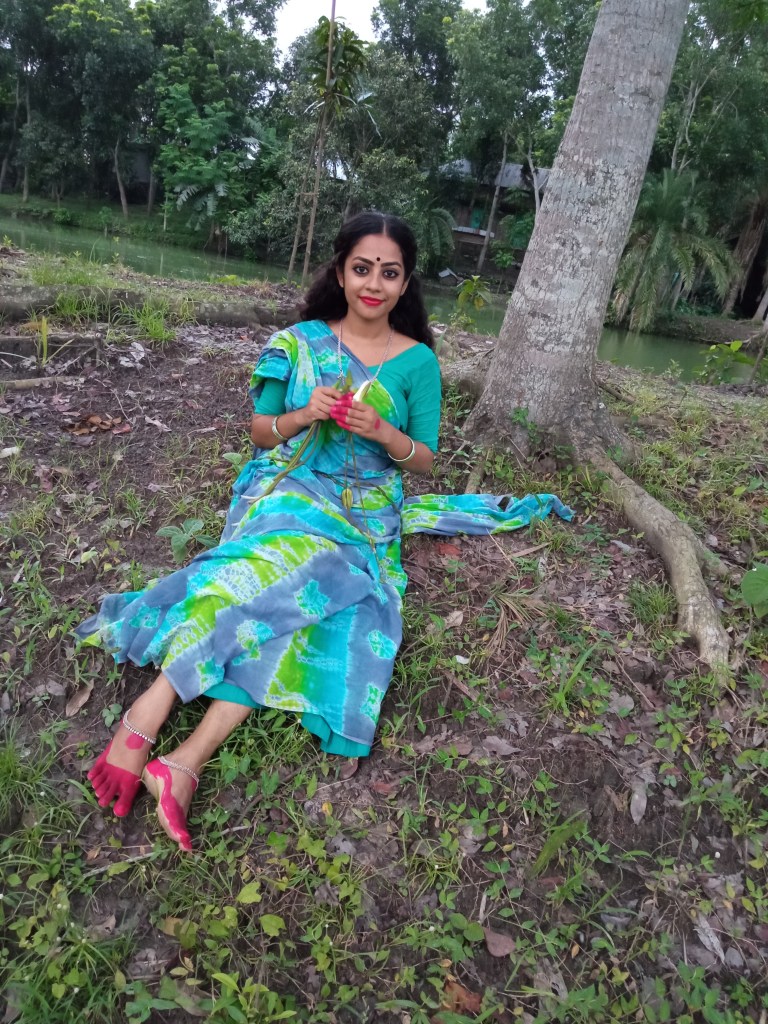
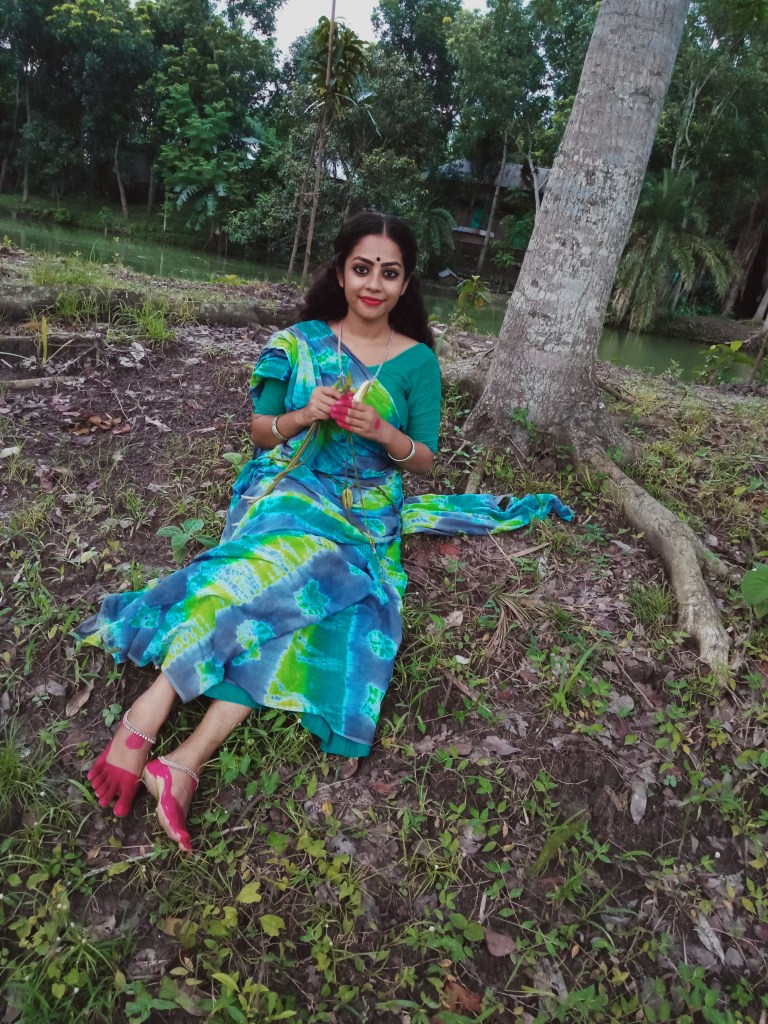
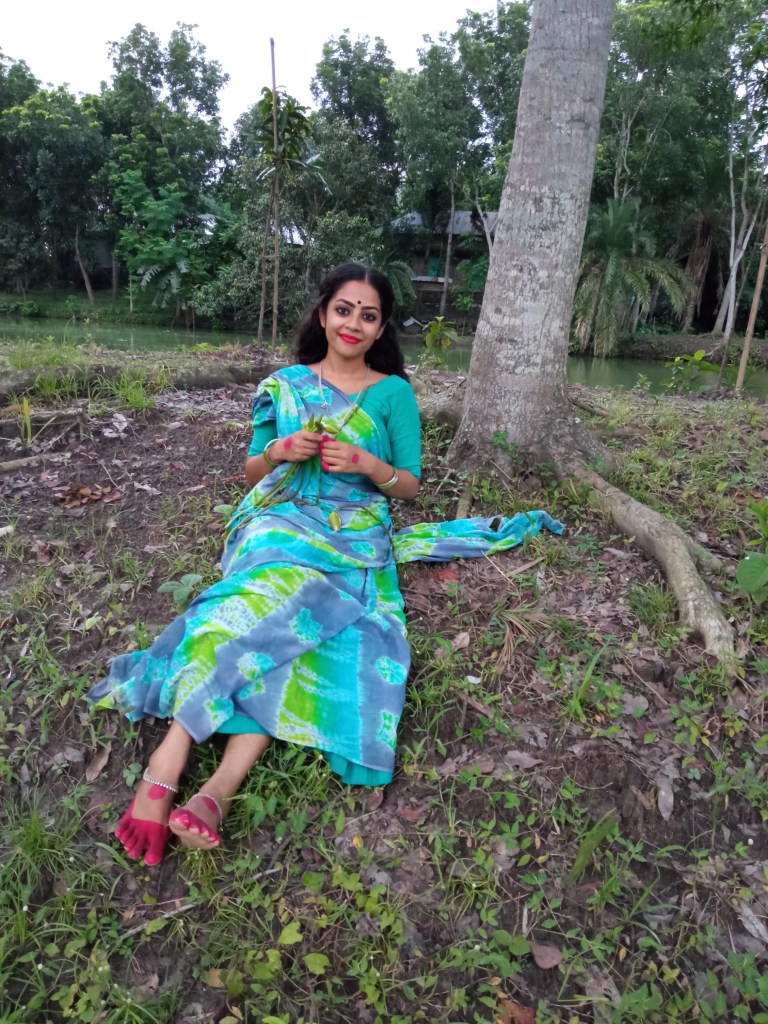
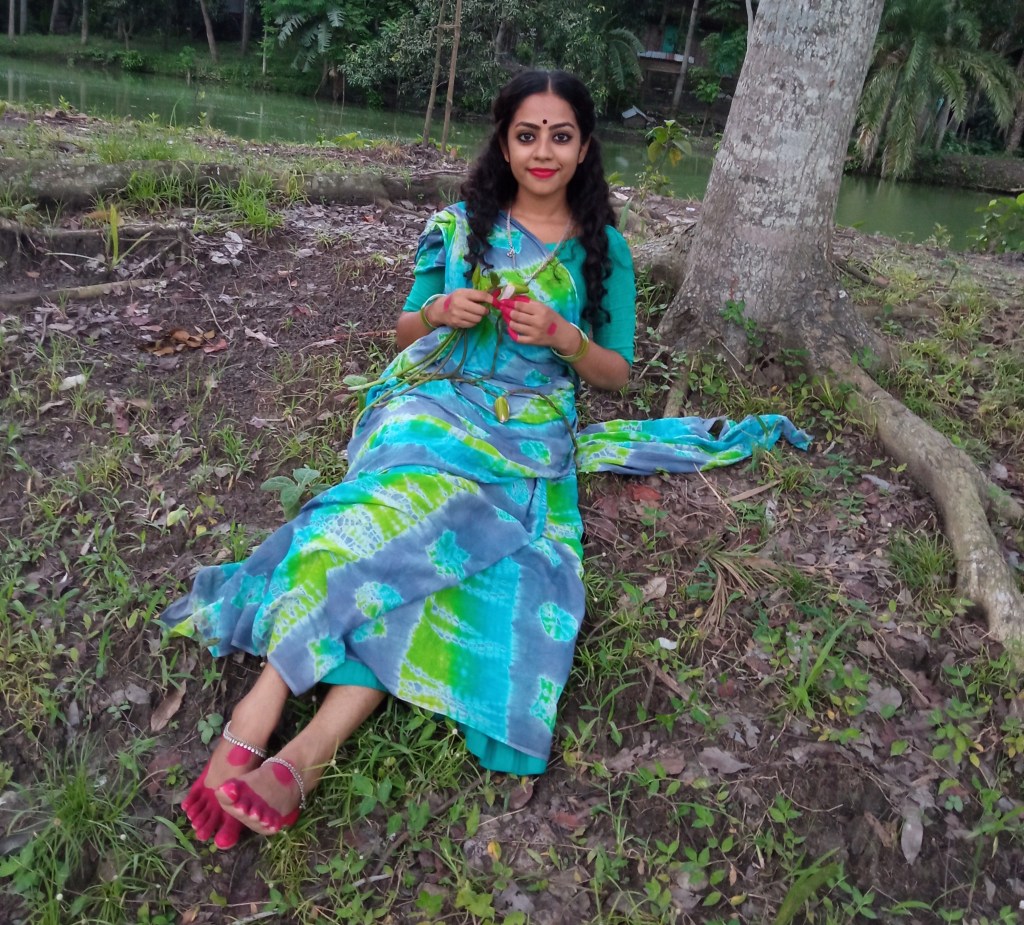
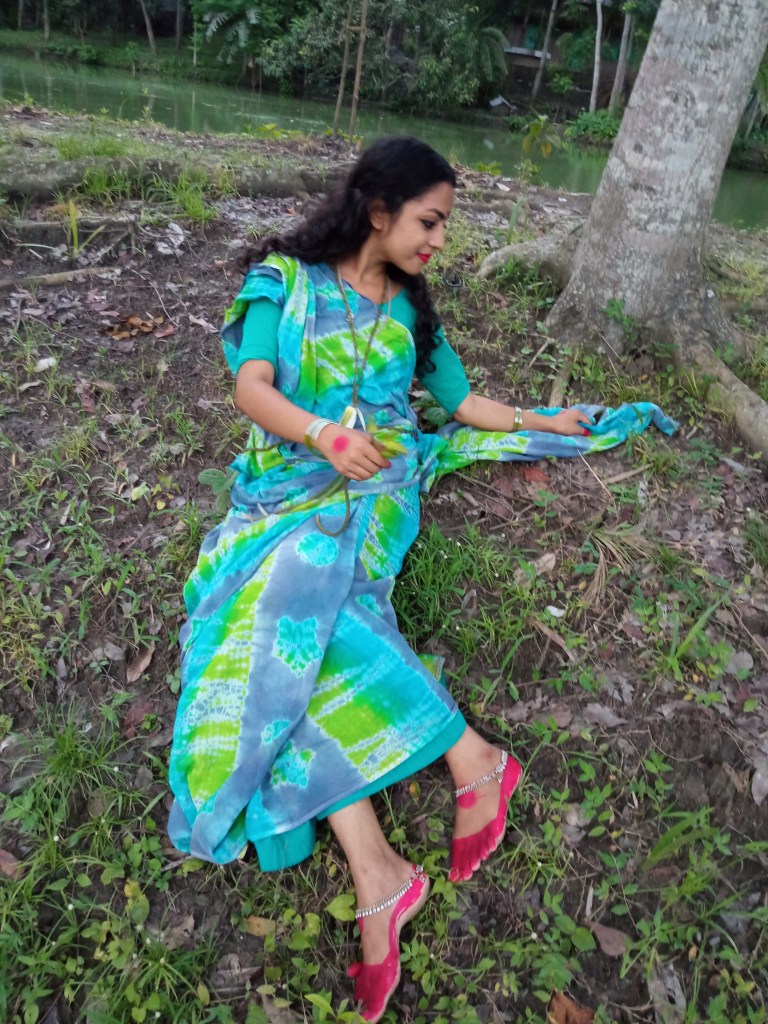
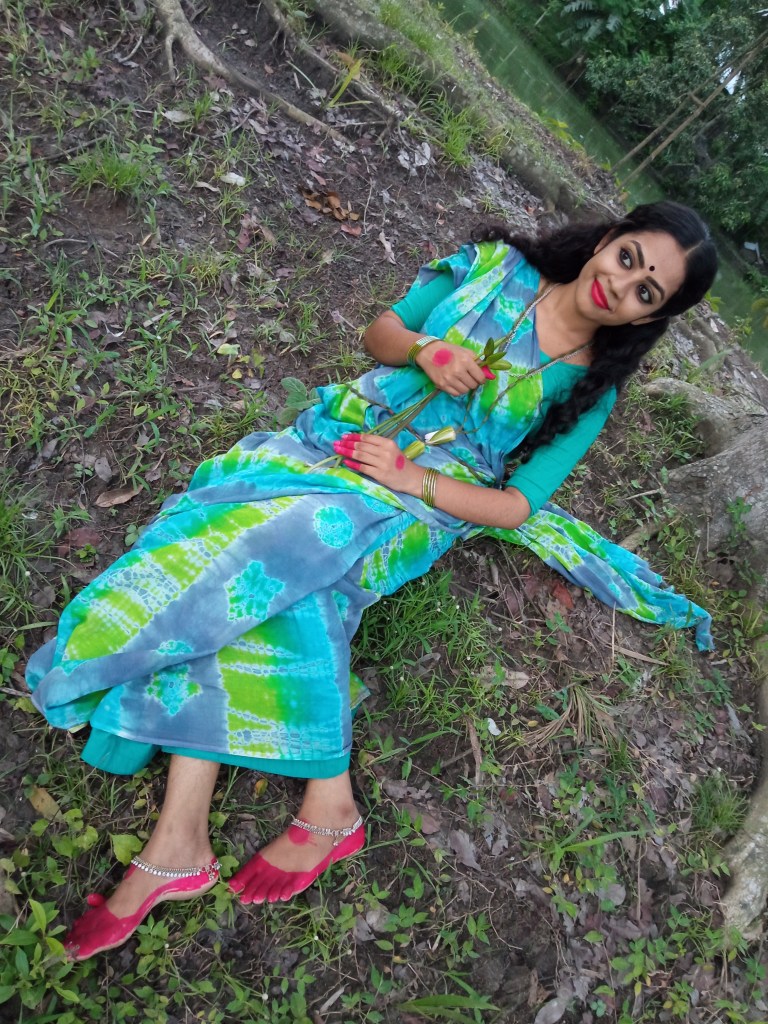
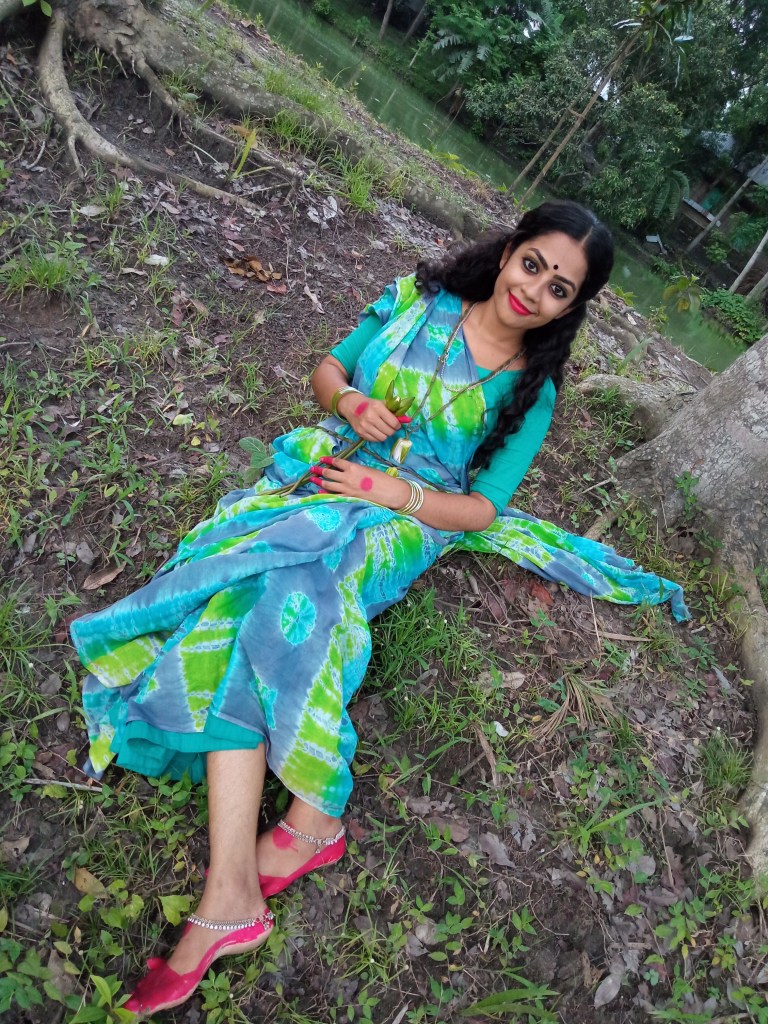
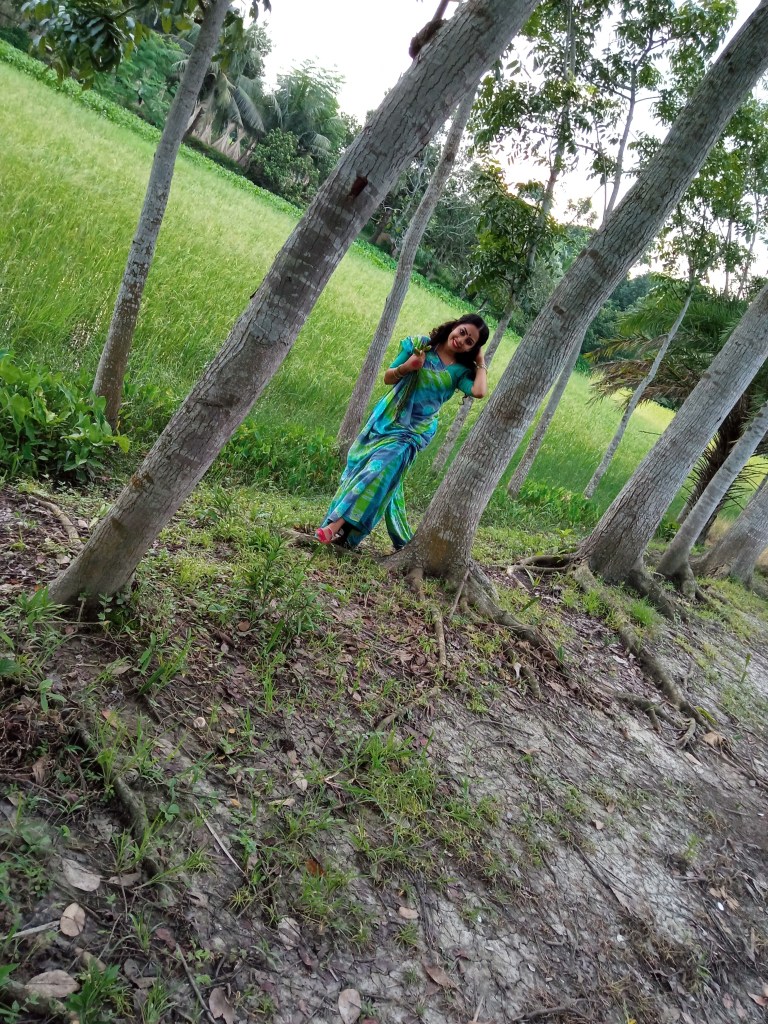
Growing up as a girl from a village of wetlands and water lilies, it was almost instinctive for me to carry within myself the imagery of Hajar Bachhor Dhore—“Tumi shutoy bedhechho shaplar phool” (“You have strung water lilies on a thread”).

My approach to modelling has rarely been about posing for the camera alone. Its inspirations often come from the books I read, the films I watch, and the imagined worlds that emerge from the life I live.

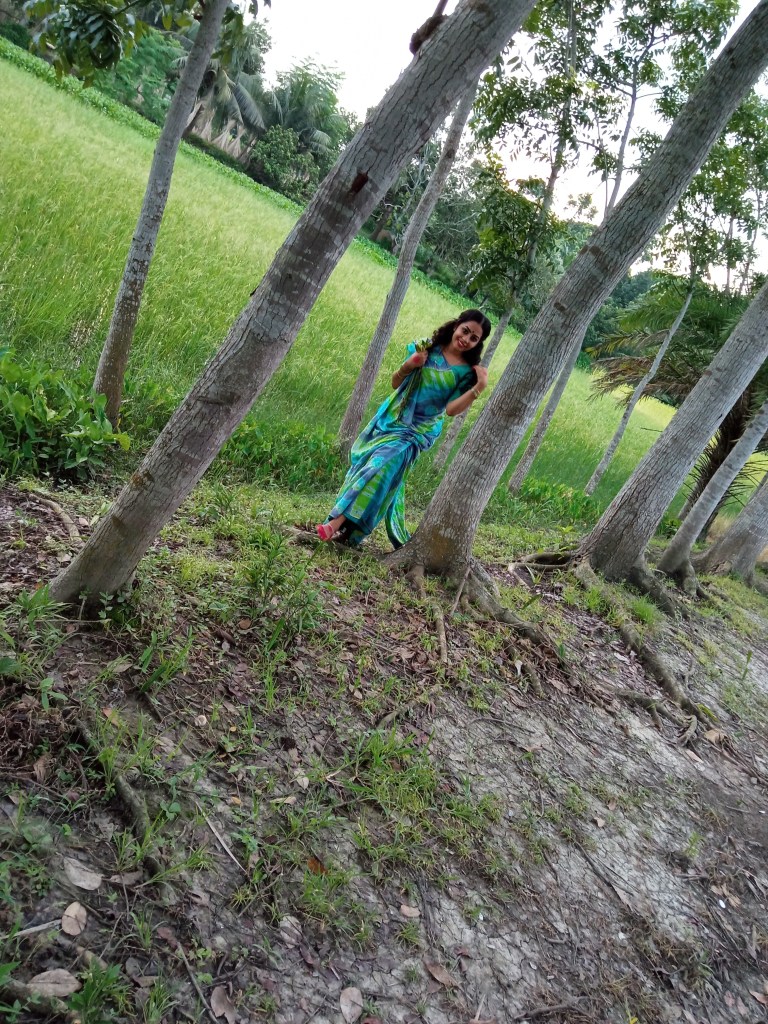
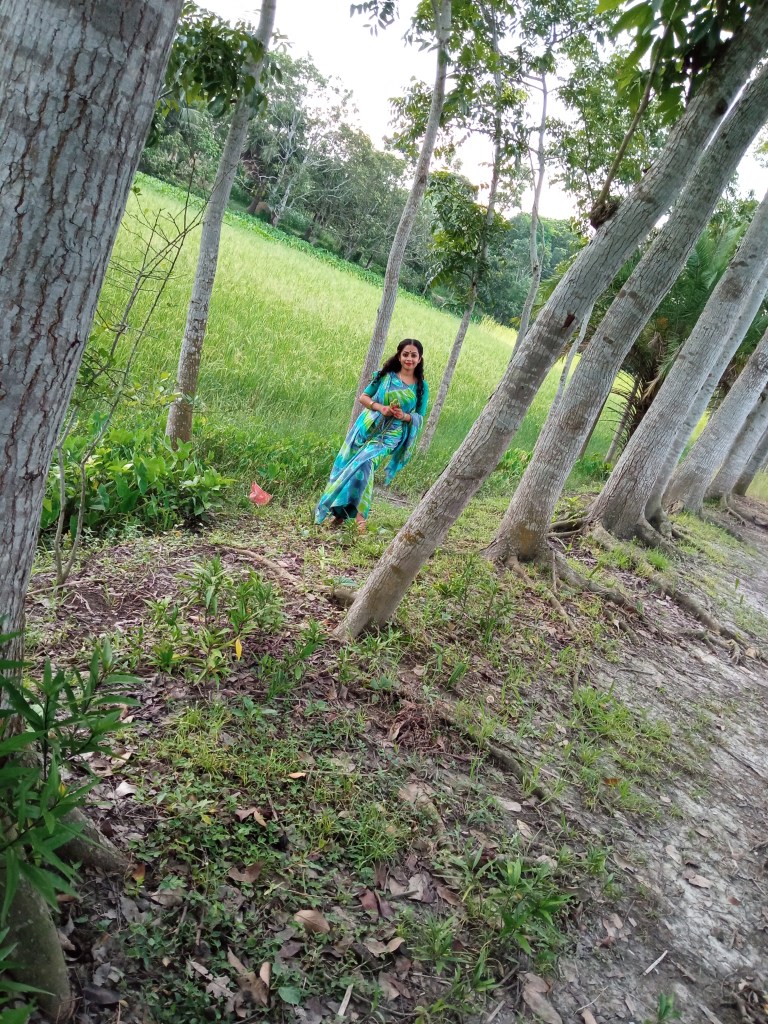
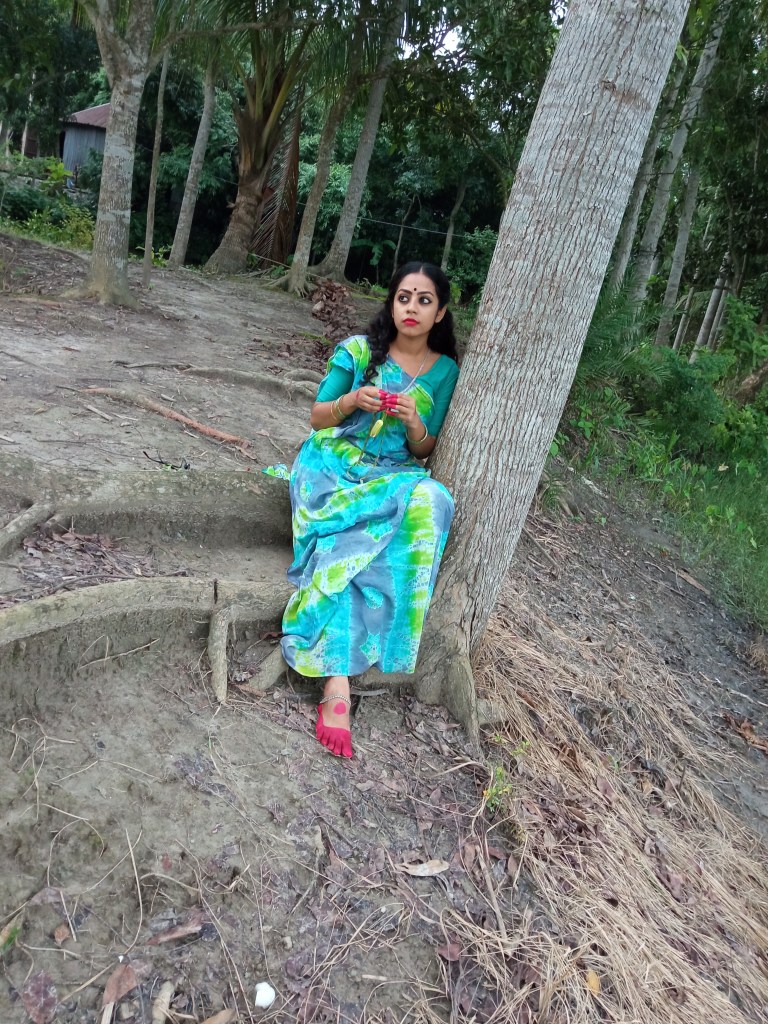
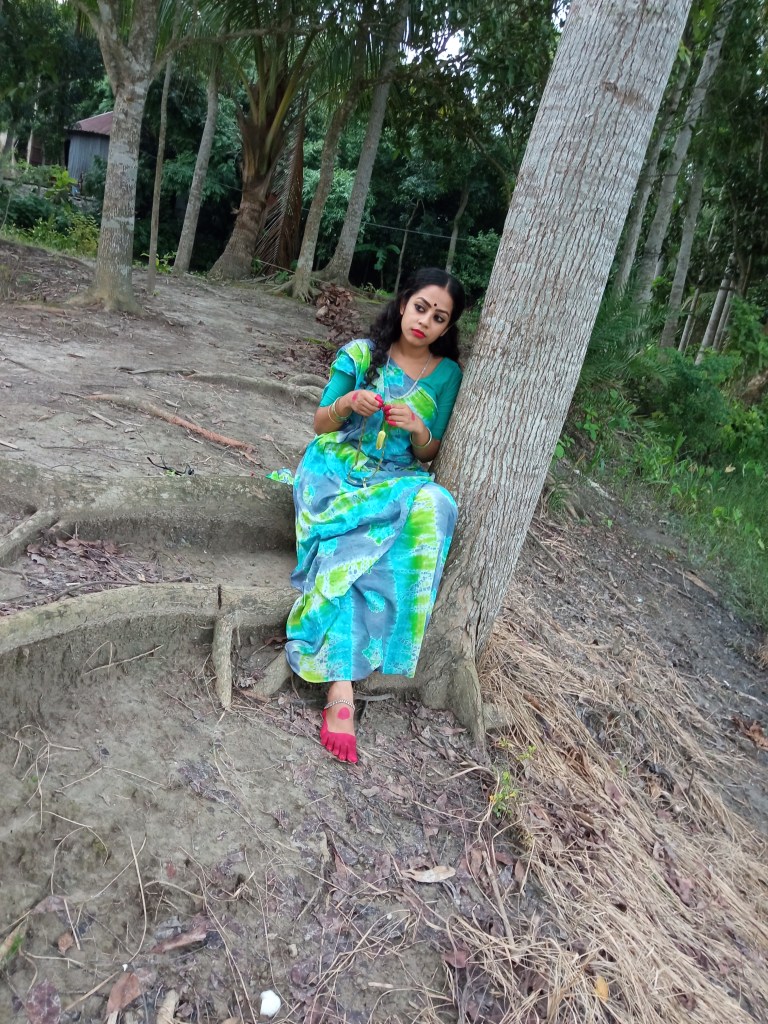
These photographs were taken during the COVID-19 lockdown, when university life had come to a sudden pause and I found myself back in my village. Surrounded once again by the landscape I had grown up with, I tried to turn something deeply familiar—the water lilies, the wetlands, and the quiet rhythms of rural life—into a visual narrative.

The Pink Frock

Cutting through the winter haze, the colours that rose into the afternoon —blue, green,
yellow, all mingled together,looked like a cluster of soap bubbles . Along both banks of
the quiet river stretched an endless yellow of mustard flowers. From the dusty road, the
slope leading down to the river was carpeted with green grass . In the distant orchard on
the far bank, the thickening shadow of dusk had already begun to darken the leaves,
which now looked strangely black.


Beyond the woods lay the railway line built by the British, abandoned now and
wonderfully quiet for walking. Crossing the tracks, passing beneath the pomelo trees,
leaving one courtyard after another behind, one came upon a little patch of field where
two or three goats were tethered. Their bleating rose above the afternoon birdsong, yet it
did not drown out the beckoning promise of crossing the river by the bamboo footbridge.


All this while the girl had been walking just behind, or at best alongside, her friend’s
uncle — careful that no one should notice the safety pin holding shut the torn zipper of
her pretty pink frock. But now, what was she to do? There was no way to walk two
abreast on the bridge. Her friend’s town uncle or her friend— who should go first? Or
would she herself have to go ahead of them? In an instant all the colour drained from her
face, and it went dry and pale.


Luckily! Uncle with the camera hanging from his shoulder, stepped onto the bridge first.
Her friend followed him, and the girl in the pink frock came behind. Her small hand
barely reached the bamboo railing, yet she crossed the bridge quite easily.


How was she managing it? Then she remembered: whenever she went to her uncle’s
house,mamabari, she had to cross a bridge like this. The memory of that familiar journey
made her heart jolt at the thought of her mother. She had been here without her mother
for three days. If she had to stay one more day, surely she would suffocate and die from
missing her mother. Her eyes misted until her longing for home dissolved into tears.


Not that staying here was any hardship in itself — the exam centre was close by too. She
studied together with her friend; and her friend’s aunt even fed her, cooking whatever
food she liked. And now, on top of it, her friend’s town uncle was taking them out to have
their picture taken.


Anyway, after crossing the bridge and reaching the other side, the breeze felt good. In the
afternoon, women and girls from the village came to take their cows and goats home.
Someone had come to pick tender pea shoots. Their little boys kept a sharp watch over
the young peas, lest anyone steal the tender green peas.


Ignoring all those eyes, the girl kept looking only toward the eye of the camera. And yet
she was terribly shy about having her photograph taken. Who knew what she looked like
through that lens?


Last year, an older boy,dada, from the neighbouring house had told her that he had
bought a feature phone with a camera. He had promised to take her picture. She had
dressed up specially in a sari for it, but afterwards the boy announced that the phone, in
fact, could not take pictures. No one else remembered the incident afterwards; she had
simply not yet reached an age where being humiliated like that, after swallowing her
shyness for it, was something anyone thought worth keeping in mind.


But all the while, the old embarrassment kept scratching at the back of her mind. What if
they laughed at her? The dress itself was beautiful: a pink georgette frock, gathered into a
full skirt, with puffed sleeves and embroidery across the chest. It belonged to her elder
sister—but then, wasn’t it always the younger sisters who had to rescue whatever their
elder sisters bought on a whim or forgot about?


Now she was angry with herself for having worn it at all. Though, in truth, , what other
dress did she own that was fit for having her picture taken?


They took photograph after photograph—sitting in the mustard field, with her arm around
her friend’s neck, trying pose after pose they had been taught. It seemed the safety pin
was not only holding shut the zipper of her dress — it seemed, too, to be holding shut
something in her mind, and her mouth along with it She longed badly to see how the
photographs had turned out, but her lips remained sealed.


How effortlessly her friend spoke! How freely she seemed with her uncle. And she
herself—if she could, she would have disappeared into the earth.It was this same uncle of
hers who brought her friend coloured pencils and beautiful frocks with wide skirts. And
her own uncle? Every time he came, he promised to bring her colours-and after so long
spent watching the road for him, she no longer even felt envy about it.Though only a few
days ago she had learned that this uncle was, in fact, not her mother’s real brother at all.
The girl let out a long sigh.


Buying colour pencils for her niece today, the woman’s mind suddenly ached, unbidden,
for those old photographs. To hold onto that stretch of time — living under the pressure
of exams, speaking little, playing the good child, wanting just a little affection, just a little
regard — she felt, for the first time in her life, she felt a deep desire to see the
photographs that had captured it.And yet, everything else around it had remained,
astonishingly, just as vivid in her memory, even now. Everything—except the photograph.

Short Story written by Tanusree Das

Blog at WordPress.com.

Up ↑